Information for institutional quotation
PTD-DBM: price, documentation and dispatch in Colombia
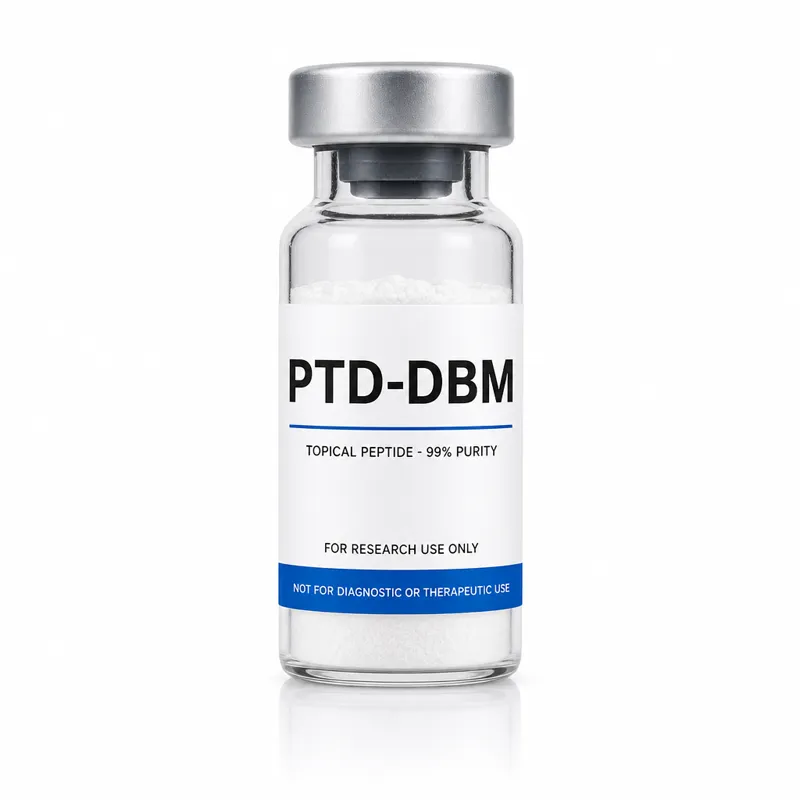
PTD-DBM is offered in a single 1 mg presentation. The catalog's commercial filter classifies it under Other Catalog Compounds, but by verified molecular family it belongs to the same technical group as MGF, BPC 157, TB500, and GHK-Cu: tissue signaling and the extracellular matrix. Technically it is a peptide combining a transduction domain with a Dishevelled-binding motif, a structural classification with two declared components. This page explains that regrouping, places PTD-DBM's price within that technical group, and details the role of the Janoshik Analytical certificate per batch. The material is distributed exclusively for research and institutional B2B quotation. The catalog's verified descriptor is a peptide combining a transduction domain with a Dishevelled-binding motif.
Presentations and visible prices
| Presentation | Code | Reference price |
|---|---|---|
| 1mg | * | US$139 |
The price above is the public value per vial. Availability and batch documentation are confirmed before the quotation is accepted.
Two components in one technical name
PTD-DBM's classification has two declared parts: a transduction domain and a Dishevelled-binding motif. A transduction domain is a sequence portion that helps a peptide cross a cell membrane; a Dishevelled-binding motif is a fragment that binds specifically to the Dishevelled protein. The catalog's technical sheet combines both components into a single designed peptide.
This classification differs from MGF's (a fragment of an IGF-1 splice variant), BPC 157's (a partial sequence of a gastric protein), or TB500's (a thymosin beta-4 fragment). All four are grouped by the system under study — tissue signaling — not by shared structure or origin.
From the "Other Compounds" commercial filter to the tissue-signaling technical family
In the purchasing catalog, PTD-DBM appears under Other Catalog Compounds, the same broad label that groups more than twenty structurally unrelated references. By molecular family, however, it corresponds to the tissue-signaling and extracellular-matrix group, alongside MGF, PEG MGF, BPC 157, TB500, GHK-Cu, B7-33, and the multi-peptide combinations in a single vial.
This page uses that second classification because it describes what PTD-DBM is more precisely than the generic commercial label does. The category name shown in the purchasing catalog remains the one used for the site's navigation; the technical grouping is what gives this text its context.
PTD-DBM's 1 mg presentation: what to state in the quotation
The tissue-signaling theme group brings together PTD-DBM along with MGF, PEG MGF, BPC 157, TB500, GHK-Cu, B7-33, and the multi-peptide combinations in a single vial. The current price for PTD-DBM's 1 mg presentation appears in the pricing block on this page.
The purchasing institution confirms that figure in that same block at the time of quotation; belonging to the same technical group as MGF, BPC 157, TB500, or GHK-Cu does not mean PTD-DBM shares its price line with any of them.
The Janoshik COA: HPLC for purity, MS for identity, per batch
PTD-DBM's certificate of analysis is issued by Janoshik Analytical, an external laboratory that works batch by batch, with high-performance liquid chromatography (HPLC) for purity and mass spectrometry (MS) for identity. Since PTD-DBM combines two structural motifs in a single sequence, identity confirmation by molecular mass is the documentary data point that distinguishes this designed peptide from any other in the catalog.
The COA is handled on request and subject to documentary availability. CAS number, molecular formula, molecular weight, and the exact purity percentage are not filled in this text: they belong to the certificate of the dispatched batch or remain visibly pending in the technical block of the page.
Physical form and storage of this low-mass lyophilized powder
The 1 mg presentation is declared by mass, so PTD-DBM corresponds to lyophilized powder in a vial, with declared origin in the United States. Shipping cost is confirmed at the time of quotation and stays separate from the price of the material; see the site's shipping information for current rates to Bogotá and the rest of the country. The dispatch date is confirmed during the institutional quotation and is not promised on this page. Outside Colombia, this reference ships to 5 countries (Costa Rica, Ecuador, United States, Mexico and Puerto Rico), from US$57; the rate for each country is listed on the site's international shipping page.
Storage conditions are set by the batch's documentation. If that documentation calls for 2–8 °C and protection from light, the refrigerated space must be assigned before PTD-DBM goes out for dispatch, and the internal record must already note the batch number and the 1 mg presentation.
The purchase file: which document answers which question
A PTD-DBM order does not trigger an automatic charge: the request is registered, the quotation is confirmed with the payment method and total defined, and only then is payment coordinated. The proof of payment should be kept together with the order code for later reconciliation.
The final file can bring together the quotation, payment, dispatch, receipt, and the Janoshik COA if it was requested. This page is limited to that documentary chain and to PTD-DBM's classification as research material, without extending its scope to any other use.
Frequently asked questions about PTD-DBM
What presentation is PTD-DBM available in?
A single 1 mg presentation. The list price appears in the pricing block on this page and is confirmed in the institutional quotation.
Why does PTD-DBM appear alongside MGF and BPC 157 if the catalog classifies it as "Other Compounds"?
Because its verified molecular family — tissue signaling — corresponds to the same technical group as those references, even though the commercial filter groups it more broadly.
Who issues PTD-DBM's certificate of analysis?
Janoshik Analytical, per batch, with HPLC for purity and MS for identity. The COA is handled on request and subject to documentary availability.
What is a Dishevelled-binding motif?
A sequence fragment that binds specifically to the Dishevelled protein, per the structural classification stated in the catalog's technical sheet.
How is PTD-DBM stored?
As lyophilized powder, per the documentation applicable to the batch. If it specifies 2–8 °C and protection from light, that condition is built into the custody record.