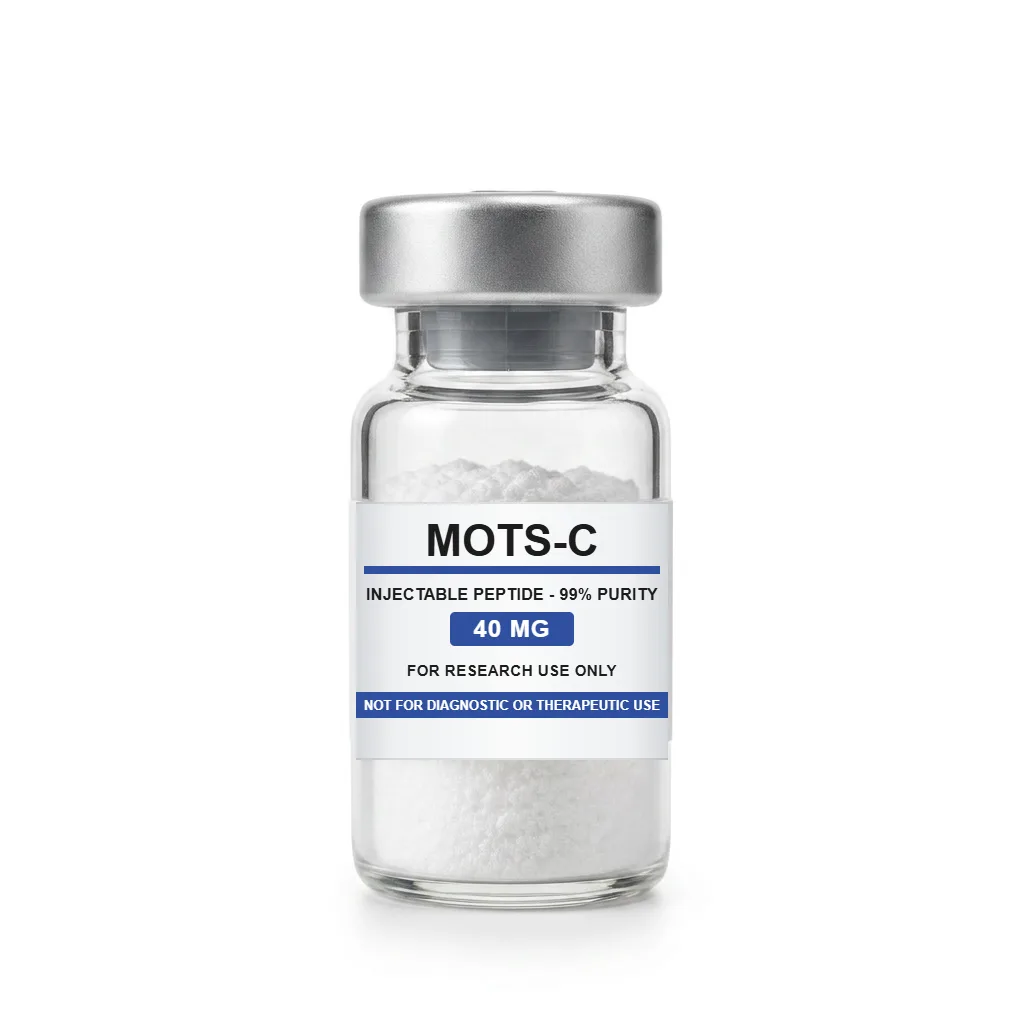
Information for institutional quotation
MOTS-c: price, documentation and dispatch in Colombia
MOTS-c is published as a technical reference for research and laboratory work. Technically, it is a 16-amino-acid peptide encoded in mitochondrial DNA. This page helps track the material's full path, from catalog identification to the receiving file. The presentation and price are shown from the active commercial data, without being fixed in the text, so the visible information stays aligned with the quote. Identity and purity are reviewed exclusively in the lot's certificate of analysis, provided on request and subject to documentation availability. Storage is set according to the documentation that applies to the lot; if it specifies 2–8 °C and protection from light, those conditions are incorporated into custody. Current shipping rates for Bogotá and nationwide delivery are listed on the site's shipping information page; timing is confirmed when the quote is issued. After the request is validated, payment is coordinated through the method confirmed in the quote. Each stage leaves distinct evidence, and this listing explains how to keep them connected. Outside Colombia, this reference ships to 5 countries (Costa Rica, Ecuador, United States, Mexico and Puerto Rico), from US$57; the rate for each country is listed on the site's international shipping page.
Presentations and visible prices
| Presentation | Code | Reference price |
|---|---|---|
| 40mg | MS40 | US$136 |
The price above is the public value per vial. Availability and batch documentation are confirmed before the quotation is accepted.
Stage 1: recognizing MOTS-c in the catalog
Traceability starts with consistent identification. MOTS-c should be recorded using the spelling shown in the catalog, together with the presentation chosen. The designation should not be replaced with an internal label that could be confused with a different reference. In an institutional purchase, the same name should be traceable from the initial request through to inventory entry. The listing provides that common reference and leaves analytical data to the document that corresponds.
The catalog shows commercial information, not a full characterization of the lot. That is why a reader can confirm here that they found MOTS-c, review the option available, and see the current price, while still needing to request the analytical evidence if their process requires it. Keeping commercial identification separate from documentary confirmation prevents a brief description from being used as a stand-in for the COA.
Stage 2: reviewing presentation and budget
The visible presentation defines the line item added to the order. The associated price comes from the current catalog and is shown before confirmation begins. To prepare a budget, the buyer should use that pair of figures and add the shipping rate that applies to the destination. It is not advisable to rely on an old quote, because the final value is set when the institutional request is confirmed.
The listing's design keeps the price outside of the editorial paragraphs. That way, a catalog change does not leave an outdated figure hidden in the content. The institution can keep the issued quote as evidence of the value agreed at that moment. The listing remains the public reference point, while the commercial document keeps the specific terms of the transaction carried out.
Stage 3: requesting and matching the COA
The purity and identity of MOTS-c are confirmed through the lot's certificate of analysis. The COA is provided on request and subject to documentation availability, and it should be traceable to the reference shown on the label. The page does not assign a standard purity or present one lot's data as if it were permanent. That choice preserves the difference between a general claim and a documented measurement.
When reviewing the certificate, the team can look for consistency between designation, lot, and presentation. If additional fields are needed, they are requested from the supplier, with verifiable evidence expected in return. This listing does not publish a CAS number, formula, molecular weight, manufacturer, or origin, because those data points should not be filled in without a specific source. When a field is absent, the correct conclusion is that it remains pending verification.
Stage 4: preparing for storage
Storage for MOTS-c should be set according to the documentation that applies to the lot. If that documentation specifies 2–8 °C and protection from light, before receiving the shipment the laboratory can confirm it has the corresponding space and a way to log the entry. The responsible person needs to know the reference's name and the order code, so the package does not sit unidentified on arrival.
Storage does not end once the material enters the building. The record should keep lot, storage location, and documentation received together. Instructions from that documentation are reviewed within the institutional procedure. This listing does not add unsupported instructions or turn a storage range into a universal condition.
Stage 5: coordinating the dispatch route
Current rates to Bogotá and to destinations nationwide are listed on the site's shipping information page. Timing is not fixed automatically on this page: it is confirmed when the quote is issued, based on destination and available coordination. That precision allows receiving to be organized without turning a general estimate into an individual commitment. The transport value is shown separately from MOTS-c's price so the budget can be audited. Outside Colombia, this reference ships to 5 countries (Costa Rica, Ecuador, United States, Mexico and Puerto Rico), from US$57; the rate for each country is listed on the site's international shipping page.
Address and receiving contact are validated within the order, not in the public content. Once the quote is confirmed, the institution can record the agreed date and prepare cold-chain custody. If the coordination changes, the update should be put in writing and tied to the same code. That preserves continuity between the request, the dispatch, and the material's arrival.
Stage 6: confirming and paying
Adding MOTS-c to the order does not produce a charge. The flow first registers the request, then confirms the quote, and finally coordinates payment through the method defined there. Before paying, the buyer can review name, presentation, price, shipping rate, and the COA requirement. This sequence reduces later corrections and lets bank support be tied to an already identified transaction.
The payment receipt is administrative evidence, not analytical evidence. It should be filed together with the quote, but it does not replace the lot's certificate. Likewise, the COA does not prove that payment was reconciled. Keeping each document in its correct role lets financial and technical review move forward without mixing conclusions.
Stage 7: verifying receipt
When receiving documentation opens, the order is compared against the package: reference, presentation, and lot. The packaging is also inspected, with any difference recorded. Current terms for discrepancies and warranty are found on the page devoted to that topic. If something needs to be reported, the order code makes it possible to locate the related quote and dispatch.
Receiving should not close the file if the requested COA is missing. The physical entry can be logged while the analytical review stays pending until the correct document is available. That transparency is preferable to tying in a certificate from another date or inferring purity. The file should clearly show what is verified and what remains open.
Stage 8: closing the research file
Closing the file brings together the request, the accepted quote, payment, dispatch confirmation, the receiving record, and the lot's COA. With those elements, an internal audit can reconstruct MOTS-c's path without relying on scattered conversations. The file should also keep the declared storage condition and the location assigned within the laboratory.
This listing remains limited to the acquisition and custody of a material for research. It does not extend that documentary scope or replace the evaluation that corresponds to the institution. Its contribution is operational: making verifiable data visible, pointing identity and purity to the lot document, and keeping gaps from being filled with unverified claims.
Frequently asked questions about MOTS-c
What is the price of MOTS-c?
The product block shows the current price for the available presentation. The institutional quote confirms the value that applies to the specific request.
Does the listing publish a purity percentage?
No. Purity is confirmed through the lot's certificate of analysis and is not extrapolated as a permanent figure for the whole reference.
Is the COA delivered automatically?
No. It is provided on request and subject to documentation availability. If received, the buyer should check that the document corresponds to the lot.
How is MOTS-c stored?
The documentation that applies to the lot should be followed. If it specifies 2–8 °C and protection from light, the laboratory should incorporate those conditions into its internal controls.
How much does it cost to ship to Bogotá or another city?
Current rates for Bogotá and for shipping elsewhere in the country are listed on the site's shipping information page. Timing is confirmed when the quote is issued for the stated destination. Outside Colombia, this reference ships to 5 countries (Costa Rica, Ecuador, United States, Mexico and Puerto Rico), from US$57; the rate for each country is listed on the site's international shipping page.
When is payment made?
Payment is coordinated after the quote is confirmed, which is where the method is defined. Payment support should be tied to the order code to make reconciliation easier.
What is compared during receiving?
Reference, presentation, lot, packaging, and documents are reviewed against the quote. Any discrepancy is reported through the institutional channel.
What is the technical difference between MOTS-c and Humanin?
MOTS-c is a 16-amino-acid peptide encoded in mitochondrial DNA. Humanin is a 24-amino-acid peptide encoded in mitochondrial DNA. The comparison is limited to structural classification and sequence length.