Information for institutional quotation
Cerebrolysin: price, documentation and dispatch in Colombia
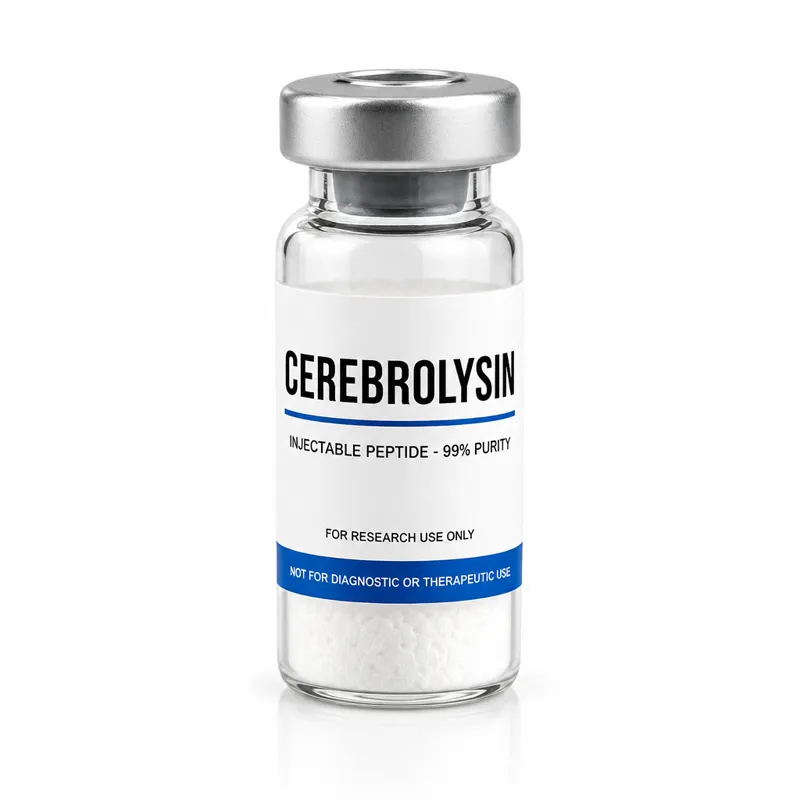
Cerebrolysin is listed in this catalog as a research and laboratory-work reference with a classification that sets it apart from the rest of the catalog: a low-molecular-weight peptide hydrolysate of porcine origin. That means it is not a single-sequence peptide but a set of smaller peptide fragments obtained by hydrolysis, grouped within the nootropics and neuromodulators category. This page brings together the two available presentations, the technical category, and the documentary conditions for an institutional quote. The current price for each presentation is shown in the commercial block of this same page. The identity and purity of the lot are never assumed from the name or the declared origin; they are confirmed by the certificate of analysis Janoshik Analytical issues per lot, using HPLC for purity and mass spectrometry for identity. This page explains what sets a biological hydrolysate apart from a synthetic peptide of defined sequence, without stepping outside the declared research framework.
Presentations and visible prices
| Presentation | Code | Reference price |
|---|---|---|
| 30mg | CBL30 | US$124 |
| 60mg | CBL60 | US$185 |
The price above is the public value per vial. Availability and batch documentation are confirmed before the quotation is accepted.
A hydrolysate, not a single-sequence peptide
Most references in this catalog are synthetic peptides with a defined, verifiable amino acid sequence, such as a tetrapeptide or a fragment of a known protein. Cerebrolysin belongs to a different class: a hydrolysate, meaning the result of breaking down a larger protein into multiple low-molecular-weight peptide fragments through a hydrolysis process. That means, unlike a single-sequence peptide, Cerebrolysin is not described with one specific amino acid chain but as a complex mixture of fragments.
That structural difference has documentary consequences: a hydrolysate is not characterized with the same parameters as a synthetic peptide of known sequence, such as MOTS-c or BPC 157, which do have a declared chain length in the catalog. For Cerebrolysin, the technical listing focuses on the origin of the hydrolysis process and on the category it falls under, without attributing to it a sequence that does not apply to this type of product.
Porcine origin: what the catalog documents, and what it does not
The catalog declares that Cerebrolysin is of porcine origin, meaning the starting material for the hydrolysis process comes from porcine tissue. That biological-origin data point is separate from the catalog's logistics origin, which for the catalog as a whole is the United States. Both pieces of information appear on the same page because they answer different questions: one describes what biological raw material the hydrolysate comes from, and the other where the reference's commercial supply is declared to originate.
This page does not expand on the porcine-origin data with claims about processing, standardization, or the percentage composition of the resulting fragments, because that information is not verified in the documentation available for this page. An institution that needs more detail on the production process should request it directly and check it against the documentation for the lot it receives, rather than assuming it from external references about similar hydrolysates from other suppliers.
Two presentations within the nootropic category
Cerebrolysin is available in two presentations, 30 mg and 60 mg, both measured by mass and corresponding, under the catalog's criterion, to a lyophilized powder in a vial. Within the nootropic peptides and neuromodulators category, it is the only reference classified as a peptide-fragment hydrolysate: the rest of the category consists of single-sequence peptides, each with its own declared structural classification.
Choosing between 30 mg and 60 mg is a commercial decision that should be stated precisely in the institutional request, along with the corresponding code. The price of each presentation is shown as current in the commercial block of this page, and both share the same porcine-origin hydrolysate classification, with no change to that classification from switching presentations.
Janoshik certificate per lot for a hydrolysate
Cerebrolysin's certificate of analysis is issued by Janoshik Analytical, per lot, using HPLC for purity and mass spectrometry for identity. For a hydrolysate, that certificate documents the lot of the product as dispatched; it does not replace or expand on the description of the production process the catalog declares. The COA is arranged on request and subject to documentary availability, and it must correspond to the specific lot number of the material received.
This page does not state a purity percentage, a CAS number, a molecular formula, or a single molecular weight for Cerebrolysin, because a hydrolysate is not described with the same parameters as a defined-sequence peptide, and because none of that data is verified in the documentation available for this page. Any additional specification should be requested and checked against the documentation for the lot dispatched.
Storing a lyophilized hydrolysate
Cerebrolysin's storage conditions are set by the documentation applicable to the lot, the same as for the rest of the catalog's lyophilized references. If that documentation specifies a 2-8 °C range and protection from light, the receiving institution should build that condition into its custody record before the package arrives, without assuming a biological-origin hydrolysate requires handling different from what is declared for the specific lot.
Cerebrolysin is handled on a made-to-order basis, with a 15-day coordination window. Shipping fees to Bogota and to other cities are set out on the site's shipping information page, with timing confirmed at the time of the quote based on destination. That coordination lets the laboratory prepare storage space before the biological material enters inventory. Outside Colombia, this reference ships to 5 countries (Costa Rica, Ecuador, United States, Mexico and Puerto Rico), from US$57; the rate for each country is listed on the site's international shipping page.
Purchase record for a biological-origin reference
A Cerebrolysin order is recorded first, the quote is confirmed in writing, and payment is coordinated afterward, with the method and total already set in that confirmation. Before paying, the institution can verify presentation, category, declared origin, and COA requirement, so the payment receipt ends up tied to an identified request rather than a generic hydrolysate description.
The recommended file brings together the request, the accepted quote, proof of payment, dispatch confirmation, the receiving record, and Janoshik's certificate for the lot when one was requested. For a biological-origin reference like this one, keeping a record of the declared porcine origin as well helps the institution fully document what it acquired and under what classification.
Frequently asked questions about Cerebrolysin
Is Cerebrolysin a single-sequence peptide, like BPC 157 or MOTS-c?
No. The catalog classifies it as a low-molecular-weight peptide hydrolysate, meaning a mixture of fragments obtained by hydrolysis, distinct from a peptide with a single declared amino acid sequence.
What does it mean that Cerebrolysin is of porcine origin?
That the starting material for the hydrolysis process comes from porcine tissue, per the classification declared in the catalog. This biological-origin data point is separate from the catalog's general logistics origin.
Who certifies Cerebrolysin's lot?
Janoshik Analytical, per lot, using HPLC for purity and mass spectrometry for identity. The certificate is arranged on request and subject to documentary availability.
How is Cerebrolysin stored?
Per the documentation applicable to the lot. If it specifies 2-8 °C and protection from light, the receiving institution should build that condition into its custody setup before dispatch.
Do the 30 mg and 60 mg presentations have different classifications?
No. Both correspond to the same porcine-origin hydrolysate and the same lyophilized-powder physical form; only the declared mass and the current price of each presentation change.